
Why Your Arguments Keep Derailing: The Science of Emotional Flooding
Summary: You are three minutes into a conversation that was supposed to be calm. You planned it. You picked the right moment, used the right words to start. And then something happened.
Maybe it was a tone. Maybe it was a specific phrase your partner used. Maybe it was nothing you could even name afterward. But something shifted and now your chest is tight, your thoughts are racing, and the person you love most is looking at you like you've become someone they don't recognize.
You're not having the conversation anymore. You're in it.
This experience -- the moment an argument stops being a conversation and becomes something else entirely -- is one of the most researched phenomena in couples therapy. Dr. John Gottman, who spent more than four decades studying thousands of couples in his University of Washington "Love Lab," has a precise name for it: diffuse physiological arousal, or what most people call emotional flooding. And understanding it may change the way you fight for good.
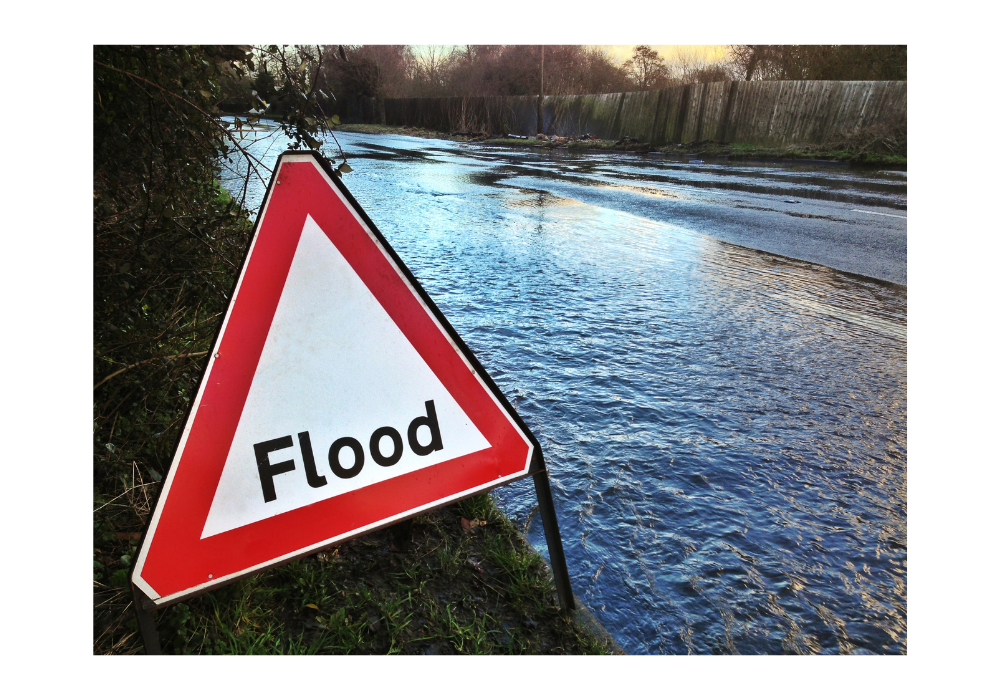
When we become flooded with emotion, our brains are unable to have productive adult conversations. The only option is to press the reset button and take a time out.
What Actually Happens in Your Body
Flooding isn't a metaphor. It's a physiological event.
When conflict escalates past a certain threshold, your body interprets the interaction as a threat. The same alarm system that would fire if a car swerved toward you on the highway activates during a heated exchange with your partner. Adrenaline and cortisol flood your bloodstream. Your heart rate climbs. Breathing shallows. Blood moves away from your brain's prefrontal cortex -- the part responsible for empathy, perspective-taking, nuanced reasoning -- and toward your muscles.
Gottman's research identified a specific threshold: when heart rate climbs above approximately 100 beats per minute during conflict, people lose meaningful access to the cognitive functions that productive disagreement requires. You can no longer take in your partner's perspective. You can no longer accurately read their facial expressions or tone. You are, in the most literal neurological sense, not equipped to have this conversation right now.
This is not a character flaw. It is your nervous system doing exactly what it was designed to do. The problem is that it was designed for physical danger, not relational stress -- and it cannot tell the difference.
Why High Achieving Couples Are Especially Vulnerable
Here's something couples rarely expect to hear: the same qualities that make someone exceptional at work can make conflict at home significantly more difficult.
People who operate in demanding environments -- consulting, law, medicine, tech, entrepreneurship -- have often trained themselves to stay engaged under pressure, to push through discomfort, to not back down when things get hard. These are useful skills in a boardroom or an operating room. In a relationship conflict, they tend to accelerate flooding rather than prevent it.
When you are physiologically flooded but your personality drives you to stay in the conversation rather than back down, you end up speaking from a nervous system that's in crisis mode. The words may sound articulate. The logic may feel airtight. But the empathy and regulation required to actually move the conversation forward are offline.
Gottman's data showed that men, on average, flood at lower thresholds than women and take longer to recover. His researchers theorized this reflects a more reactive sympathetic nervous system response to interpersonal conflict -- meaning many couples find themselves in a dynamic where one partner has already flooded before the other realizes the conversation has escalated. That's not the whole picture, but it's a common one. And it explains a lot of the "I don't even know what happened" conversations that couples try to dissect the next morning.
For couples in Denver navigating demanding careers alongside relationship tension, understanding how flooding shows up in your specific dynamic is often the first step toward actually changing something.
The Trap Inside the Time-Out
Most couples, when they hit a wall in an argument, either push through or walk away. Walking away sounds like progress. Sometimes it is. But there's a critical detail that most people miss.
Gottman's researchers interrupted couples mid-argument and told them equipment needed adjustment -- they asked them to take a break and read magazines for 30 minutes, without discussing the conflict. When the couples resumed, their heart rates were measurably lower and their interactions significantly more constructive. The break worked.
But when the researchers asked couples to take breaks on their own, without structure, the results were inconsistent. Why? Because of what people do during those breaks.
If you use the break to rehearse what you're going to say next, replay the most painful things your partner said, build the case for why you're right, or stew in the injustice of the situation -- your stress hormones do not recede. Rumination keeps the nervous system activated. Your body cannot distinguish between a real threat and a vividly imagined one. If you are mentally reliving the argument, you are still in the argument.
Gottman estimated that norepinephrine -- a key stress hormone involved in flooding -- takes approximately 20 minutes to clear from the cardiovascular system. But only if you actually disengage from the stressor. The break only works if you use it for something genuinely distracting or calming: a walk, music, reading something unrelated, a breathing practice. Something that gives your nervous system an actual off-ramp.
This is why the guidance in effective communication work isn't just "take a break." The break itself requires structure. Twenty minutes minimum. No rehashing. A specific plan for returning. And a shared commitment -- made in advance, not in the middle of a fight -- that the break is not abandonment or avoidance. It is strategic self-regulation in service of the conversation.
What Makes the Difference: Repair, Not Resolution
There is a companion finding in Gottman's research that belongs alongside the flooding data. He found that the single strongest predictor of long-term relationship success is not how often couples fight, or even how badly they fight. It is whether they make repair attempts and whether those repair attempts land.
A repair attempt is any gesture that tries to de-escalate a conflict before it reaches full flood: a touch on the arm, "I need a minute," a poorly-timed joke, "I hear you," the willingness to slow down. Gottman's lab found that these attempts are happening in almost every couple's conflicts. The difference is whether partners in stable relationships actually notice and respond to them.
When flooding is high, repair attempts fail, not because they aren't offered, but because a flooded nervous system can't register them accurately. The person offering a repair reads their partner's non-response as rejection or dismissal. The flooded partner isn't being dismissive; they simply cannot hear it.
This is the cycle that flooding creates. It is not about bad intentions. It is about two people who have both lost access to the parts of themselves that could actually connect with each other.
The couples who break out of this pattern learn two things. First, to recognize flooding in themselves before it completes - to catch the early physical signals (the chest tightening, the narrowing of focus, the urge to score points) before they're in full crisis. Second, to build agreements outside of conflict about what will happen when flooding arrives: what the code word is, who initiates the break, how long it lasts, how you return.
These are skills. They are learnable. And they feel completely different once they are in your actual hands rather than in a book.
When to Stop Trying to Solve It Yourselves
Flooding is a common experience for nearly every couple. But for some couples, the flooding is consistent enough, and the repair capacity low enough, that the pattern has become entrenched. Arguments end badly, the same cycles repeat, and every attempt at a calm conversation eventually ends up in the same place.
If that describes your relationship, the problem is not that you haven't tried hard enough. It's that emotional flooding is neurologically designed to override insight. You cannot think your way out of it in the moment. And trying to have the productive version of the conversation while both of you are still physiologically activated is not a skill issue -- it is a structural barrier.
That's where a trained third perspective changes things. A therapist working with flooding can help both partners recognize their early signs, develop shared protocols, and practice the kind of repair that actually interrupts the cycle -- not in theory, but in the room where it needs to happen.
If you and your partner keep ending up here, it may be worth a conversation about what's actually driving it.
Book a free 20-minute consultation with Blueprint Relationship Therapy - no commitment, just an honest look at where things are.
Works Cited
Gottman, J. M., & Levenson, R. W. (1992). Marital processes predictive of later dissolution: Behavior, physiology, and health. Journal of Personality and Social Psychology, 63(2), 221-233. https://doi.org/10.1037/0022-3514.63.2.221
Gottman Institute. (2021). "Does Flooding Play a Role in Your Perpetual Conflict?" Gottman Institute Blog. https://www.gottman.com/blog/does-flooding-play-a-role-in-your-perpetual-conflict/
Gottman Institute. (2013). "Making Sure Emotional Flooding Doesn't Capsize Your Relationship." Gottman Institute Blog. https://www.gottman.com/blog/making-sure-emotional-flooding-doesnt-capsize-your-relationship/
Gottman Institute. "Physiological Self-Soothing." Gottman Institute Blog. https://www.gottman.com/blog/weekend-homework-assignment-physiological-self-soothing/
Babcock, J. C., Waltz, J., Jacobson, N. S., & Gottman, J. M. (1993). Power and violence: The relation between communication patterns, power discrepancies, and domestic violence. Journal of Consulting and Clinical Psychology, 61(1), 40-50. https://doi.org/10.1037/0022-006X.61.1.40
Kiecolt-Glaser, J. K., Malarkey, W. B., Chee, M., Newton, T., Cacioppo, J. T., Mao, H. Y., & Glaser, R. (1993). Negative behavior during marital conflict is associated with immunological down-regulation. Psychosomatic Medicine, 55(5), 395-409. https://doi.org/10.1097/00006842-199309000-00001
Johnson, S. M. (2004). The Practice of Emotionally Focused Couple Therapy: Creating Connection (2nd ed.). Brunner-Routledge.
